

Eulogy vs Obituary vs Death Notice: What's the Difference?

When you're arranging a funeral, you may be asked to write a eulogy, an obituary or a death notice. They can draw on the same names, dates and memories, so it helps to understand who each piece is for and how it will be used.
A eulogy is a tribute written to be spoken at the service. An obituary tells the person's life story for people to read, online or in print. A death notice is a brief announcement of the death, with funeral or memorial details when there's a service to announce. You may need more than one, but they don't have to be three completely separate writing projects.
You can draw on the same facts and memories for all three. Start with the piece people need first: an announcement if you're sharing service arrangements, or the speech if you've been asked to speak.
What is a eulogy?
A eulogy is a speech about someone who has died, given at their funeral or memorial service. It's usually written and delivered by a family member or close friend, who brings their own memories to the story. Although a eulogy can be printed or shared online afterward, it is written first for the people who will hear it.
That spoken setting gives you room to be personal. You might tell a story that captures their sense of humor, describe something they taught you, or remember an ordinary habit that everyone recognized. You don't need to cover every stage of their life; a few memories can give the room a much stronger sense of the person you knew.
To give the speech a simple shape, you could include:
- Who you are and your relationship to the person
- Two or three memories that show their personality
- What you'll remember or miss about them, followed by a farewell
Three to five minutes is a useful starting point for a short eulogy. If several people are speaking, agree on the time available with whoever is organizing the service, then read your draft aloud to see how comfortably it fits.
If you have only a few minutes to speak, our short eulogy guide helps you build a tribute around one memory.
What is an obituary?
An obituary tells the story of someone's life alongside the announcement of their death. It can appear on a funeral home's website, an online memorial page or in a newspaper, and a version of it may also be included in the funeral program. The family often writes it, sometimes with help from the funeral home.
Unlike a eulogy addressed to the people at the service, an obituary may be read by someone who knew the person years ago or only knew one part of their life. It brings those parts together: where they grew up, the people they loved, the work they did and the interests that mattered to them. Personal details belong here too; an obituary needn't be just a list of dates and achievements.
Obituaries are commonly written in the third person, referring to the person by name or as “she,” “he” or “they.” Personal quotations and words of farewell can be included too.
A typical obituary includes:
- Their full name, age and date of death
- Important places, relationships and events in their life
- Their work, interests and the things people knew them for
- Family members you want to mention
- Service details and any request about flowers or donations
For length, about 250 to 300 words is a common print format. An online obituary can be longer if the publishing site allows it. The cost question below explains how space and publication charges affect that choice.
What is a death notice?
A death notice is a short announcement that someone has died. It gives the essential details and, if a funeral or memorial is planned, tells people when and where it will take place. It can be published in a newspaper or shared online, without the fuller account of the person's life that an obituary provides.
Because its purpose is to inform, the wording is usually straightforward. A notice might name the person and close family, give the date of death, and explain the service arrangements. It can also say that the service is private or include a request for donations instead of flowers.
Many notices take only a few lines, often fewer than 100 words. If arrangements aren't settled yet, you can announce the death first and share the service details later. The family can write the notice, or ask the funeral home to help prepare and place it.
Some publishers use “death notice” and “obituary” for the same family-submitted announcement. The useful distinction is how much you want to say: a brief announcement, or a fuller account of the life. If you're submitting one for publication, check what the publisher includes under that name.
Eulogy, obituary and death notice at a glance
| At a glance | Eulogy | Obituary | Death notice |
|---|---|---|---|
| Purpose | Remember them in a speech | Tell their life story | Announce the death |
| Where | Funeral or memorial service | Online, newspaper or program | Online or newspaper |
| Content | Memories and personal stories | Life, family and service details | Names, dates and arrangements |
| Length | Often 3–5 minutes | Often 250–300 words in print | A few lines, often under 100 words |
| Written by | The speaker | Family or funeral home | Family or funeral home |
These are common formats, rather than fixed limits. You can publish one obituary that both tells the life story and announces the service, rather than preparing a separate death notice.
Common questions about eulogies, obituaries and death notices
Do you have to publish an obituary or a death notice?
Not usually. You can tell family and friends about the death and share the arrangements directly, without publishing either. Giving a eulogy is also a personal choice, rather than something every funeral has to include.
There is a separate legal issue to be aware of: an estate may need to publish a notice to creditors, which tells people owed money by the person who died how to make a claim. That is different from an obituary or a personal death announcement. The person handling the estate should check the applicable requirements with the estate's lawyer.
Is there always an obituary when someone dies?
No. There may be no obituary if the family chooses not to publish one. Newspaper staff also write obituaries as news stories, usually about notable people, but those are selected by the paper rather than automatically written for everyone who dies.
Can you publish an obituary or death notice online instead of in a newspaper?
Yes. You can publish an obituary or death announcement on a funeral home's website or a memorial page, then send the page to family and friends or share it through social media. A newspaper is another option if it reaches people you want to tell, such as the person's local community.
If you choose newspaper publication, you'll normally submit the text through the paper's obituary service or ask the funeral home to arrange it. Check the deadline, available space and cost before deciding how much to write. The paper may call a family-submitted piece an “obituary,” a “paid obituary” or a “death notice,” so look at what the service offers rather than relying on the label alone.
What does it cost to publish an obituary or death notice?
Online publication can be free, depending on the site you use. Newspaper placement is often paid for by the family, with the price depending on the publication and the space the notice takes up. Some papers charge by the word, line or column inch; a photograph or extra publication days may add to the cost.
Ask for the total price for your proposed text and photograph, including any fee if the funeral home is submitting it for you. You can also publish a short announcement in the newspaper and keep the fuller obituary online, rather than paying to print the whole life story.
Which should you write first: the death notice, obituary or eulogy?
The death notice often comes first because it tells people about the death and any upcoming service. If you intend to share the arrangements in a fuller obituary, that obituary takes on the same immediate job. Have the announcement ready in time for people to make plans, allowing for any publication deadline.
An obituary without service details can be published later. The eulogy needs to be ready for the service itself, but it's worth starting it early enough to choose your memories and practice reading it aloud. You can borrow details between the pieces as you work, rather than waiting to finish one before beginning another.
Can you use the same writing for an obituary and a eulogy?
Yes, you can use the same facts and memories as a starting point, but adapt them for the audience. An obituary gives readers an account of the person's life; a eulogy lets you speak about what that life meant to you and the people gathered at the service.
For a simple fictional example, an obituary might say: “She taught at Lincoln Elementary School for 30 years and continued volunteering after retirement.” In a eulogy, you could develop the memory: “Mom never really stopped teaching. Even after she retired, children would knock on our door with a book they wanted her to read with them.”
If you're turning an obituary into a eulogy, choose a few details you can bring to life through stories. Going the other way, give an unfamiliar reader the names, dates and context they would need to understand those memories. You can then shorten that obituary into a death notice by keeping the announcement and any service arrangements.
Can you give a eulogy at a Catholic funeral Mass?
Check with the parish before writing a eulogy for a Catholic funeral Mass. Some parishes allow brief “words of remembrance,” often from one speaker for about three to five minutes, rather than a fuller eulogy during the Mass. The priest may ask to see the text in advance.
A longer tribute may be better suited to the vigil, a prayer service held before the funeral, or to a gathering at the graveside. The arrangements vary by parish, so ask the priest where a personal tribute can fit and how much time the speaker will have.
Finding the words, together
Turn your memories into a first draft
You do not have to start with a blank page. Share your memories and details with Eulogize’s free writer to shape a first draft of a eulogy, obituary or death notice. The details you share make the draft personal. Read, check and edit the draft before you share it.
Try the free writerCreate with Eulogize
Create a funeral program or tribute video
The stories you've gathered can become part of the tributes you share at the funeral. With Eulogize, you can make a funeral program with photos, the order of service and your loved one's obituary, or create a tribute video that brings their photos together with music. Explore the templates and choose what you'd like to make.
Explore funeral programsRelated articles
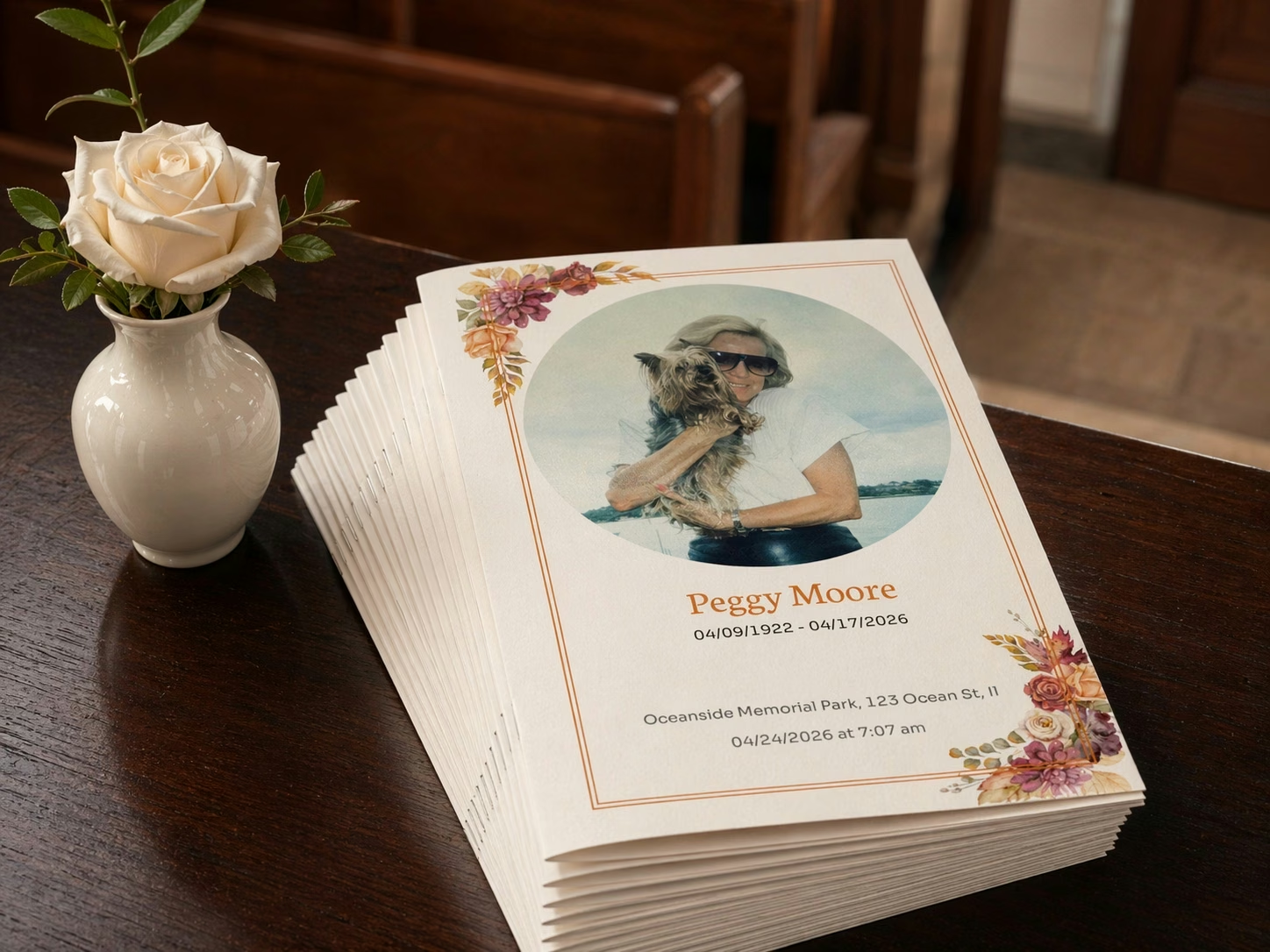
Microsoft Publisher Alternatives for Funeral Homes (2026)
Compare funeral stationery software, printing options, family access and case-management integrations to find your Microsoft Publisher replacement.

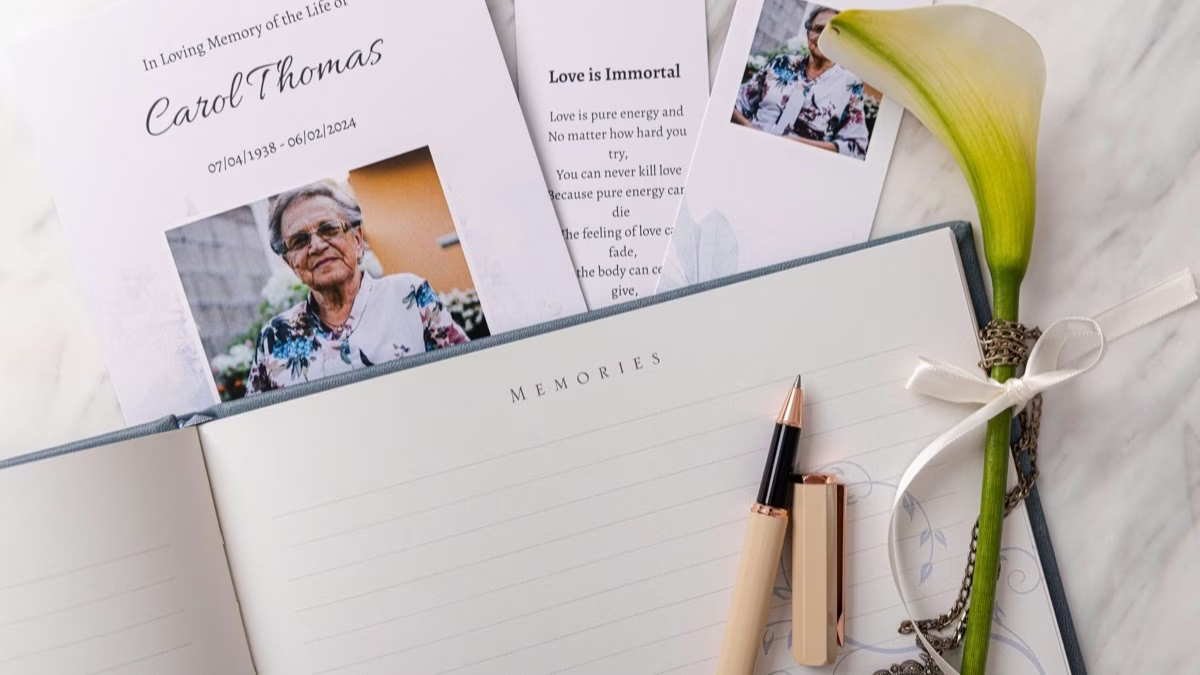
What to Write in a Funeral Thank You Card (With Examples)
Learn what to write in a funeral thank-you card, who to thank, how to sign it and what to say if your card is late.
